Listed Building Consent
Is the outbuilding in your garden listed too? What the law says about curtilage
What the law says about outbuildings, walls and other structures in the curtilage of a listed building, read line by line, with five questions to ask before you alter one.
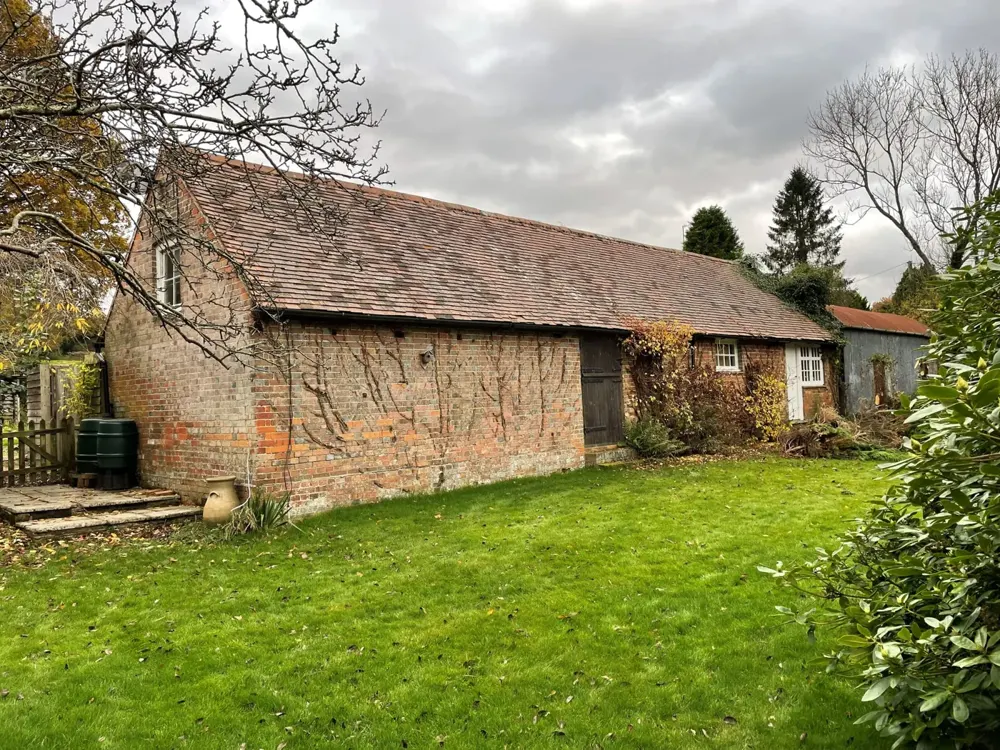
Possibly. Section 1(5) of the Planning (Listed Buildings and Conservation Areas) Act 1990 treats a structure in the curtilage of a listed building as part of that building if it forms part of the land and has done since before 1 July 1948, unless the list entry says otherwise.
New to this? Start with Grade I, Grade II* and Grade II: Does the Grade Change What You Can Do?
That matters because a barn, a garden wall or a boundary gate can be protected without being named in the list entry. This post reads the rule line by line, shows where the Act stops giving answers, and ends with five questions to put to your own building.
What does section 1(5) say, line by line?
The section works in two parts. Part (a) covers any object or structure fixed to the building. Part (b) covers any object or structure within the curtilage that is not fixed to the building, but forms part of the land and has done so since before 1 July 1948.
Both parts end in the same place: the object or structure is treated as part of the building for the purposes of the Act. It then falls under the same consent rules as the house itself.
- Within the curtilage. The structure has to stand inside the curtilage of the listed building, a term the next section returns to.
- Not fixed to the building. A structure that is attached to the house is already caught by part (a), and part (a) carries no date.
- Part of the land since before 1 July 1948. Both conditions have to be met, and the date is a cut-off rather than a guide.
Where does the curtilage stop?
The Act does not say. Section 1 does not define curtilage, and nor does section 91, the interpretation section, which defines listed building only by pointing back to section 1(5).
Planning Practice Guidance draws one useful line: the setting of a heritage asset and the asset’s curtilage may not have the same extent. Land that matters to how a house is seen can belong to its setting without belonging to its curtilage.
Because the Act is silent, the safest course is to ask the local planning authority which land it treats as the curtilage, and to ask in writing before any work starts. No test is offered here, because none came from an official source opened for this post.
Can a list entry take a structure out of the listing?
Yes, but only in words. Section 1(5A) allows the list entry to say that a particular fixed object or curtilage structure is not to be treated as part of the building, and the same subsection lets an entry say that a named part or feature is not of special interest.
Planning Practice Guidance puts the default plainly: unless the list entry indicates otherwise, the listing covers the entire building, inside and out, and “may cover objects fixed to it, and also curtilage buildings or other structures”. Silence in the entry is therefore not an exclusion.
The earlier post on internal works to a listed building applied the same subsection to staircases, fireplaces and other fixtures inside the house. The reasoning carries outdoors.
What does a curtilage listing mean for works?
The guidance says listed building consent is needed for any works to demolish part of a listed building, or to alter or extend it in a way that affects its character as a building of special architectural or historic interest, “irrespective of whether planning permission is also required”.
If a pre-1948 outbuilding is treated as part of the building, new doors, a taken-down boundary wall or a barn conversion can therefore need consent in the same way as work to the house. Carrying out such work without consent is an offence under section 9 of the Act, and the post on what a granted consent and its conditions require explains how that offence also applies to conditions.
The sample report set on this site starts from a proposal of this kind: its appraisal is written for the alteration and conversion of a curtilage outbuilding to ancillary residential accommodation.
What if the structure went up after 1 July 1948?
Part (b) reaches only curtilage structures that have formed part of the land since before that date, so a structure built later is not caught by that rule. That does not settle whether it needs any permission.
Planning permission and listed building consent are separate permissions, and a structure that is not part of the listing can still raise a planning question. Put that to the council before you start.
Five questions to ask before you alter an outbuilding
- Is it fixed to the house? If it is attached, part (a) of section 1(5) applies and the 1948 date does not come into it.
- Is it inside the curtilage? The Act gives no definition, so ask the council which land it treats as the curtilage.
- Was it there before 1 July 1948? Old maps, dated photographs and deeds can help to show when a structure arrived, and the six steps for recording a building cover how to photograph and file what stands there now.
- Does the list entry exclude it? Read the entry for words that take out a named structure or feature, because under section 1(5A) only the entry can do that.
- Would the work affect the character of the building? If it would, consent comes first, as the guidance quoted above says.
Who can help settle a doubtful case?
The council is the first to give a view on what it treats as part of a listed building, so its view matters most. A conservation architect or heritage consultant can gather the evidence on age and layout, so that the conversation starts from facts.
HeritageAI’s Preliminary Planning and Heritage Appraisal (PPHA) is a first read of a project. The AI generates it automatically from the details you give and it arrives by email; it is a first read to help you plan, not professional advice, and no person reviews each one before it is sent. If you give a list entry number, we check that listing against the National Heritage List for England.
There is good reason for optimism about old outbuildings. They are often the buildings that repay care best, craftspeople still know how to repair them, and better tools make the paperwork easier to follow.
If you are unsure what the listing covers at your property, Book a 30-minute call with Giles and ask for a first read on the structures in your garden.